A letter to the OCL community

Jonathan Payne, Director, OCL @jon · September 28, 2026 · 5 min read
Post content
Update, October 1, 2026: Subscriptions open on November 1, 2026. Existing accounts that use premium functionality have a grace period until December 1, 2026. Plan details are on the pricing page.
Today we're opening limited public previews of the new OCL TermBrowser v3 and OCL Mapper on a revamped openconceptlab.org, and announcing OCL's first paid subscription plans. Browsing, searching and publishing public terminology will stay free, and OCL's core will remain open source. I want to explain what's changing, why we're taking this step, and what we're committed to preserving.
Over fifteen years, contributors in more than 30 countries have built OCL together. More than 380 organizations manage terminology on OCL Online, and the community built and maintains nearly three-quarters of the content. Rwanda's national EMR dictionary, for example, is the second-largest source on the platform. Others run OCL in their own infrastructure: in July, Brazil's National Agency for Supplementary Health (ANS), supported by HL7 Brasil, launched its terminology management system on OCL. I'm deeply grateful for the trust and partnership that made work like this possible.
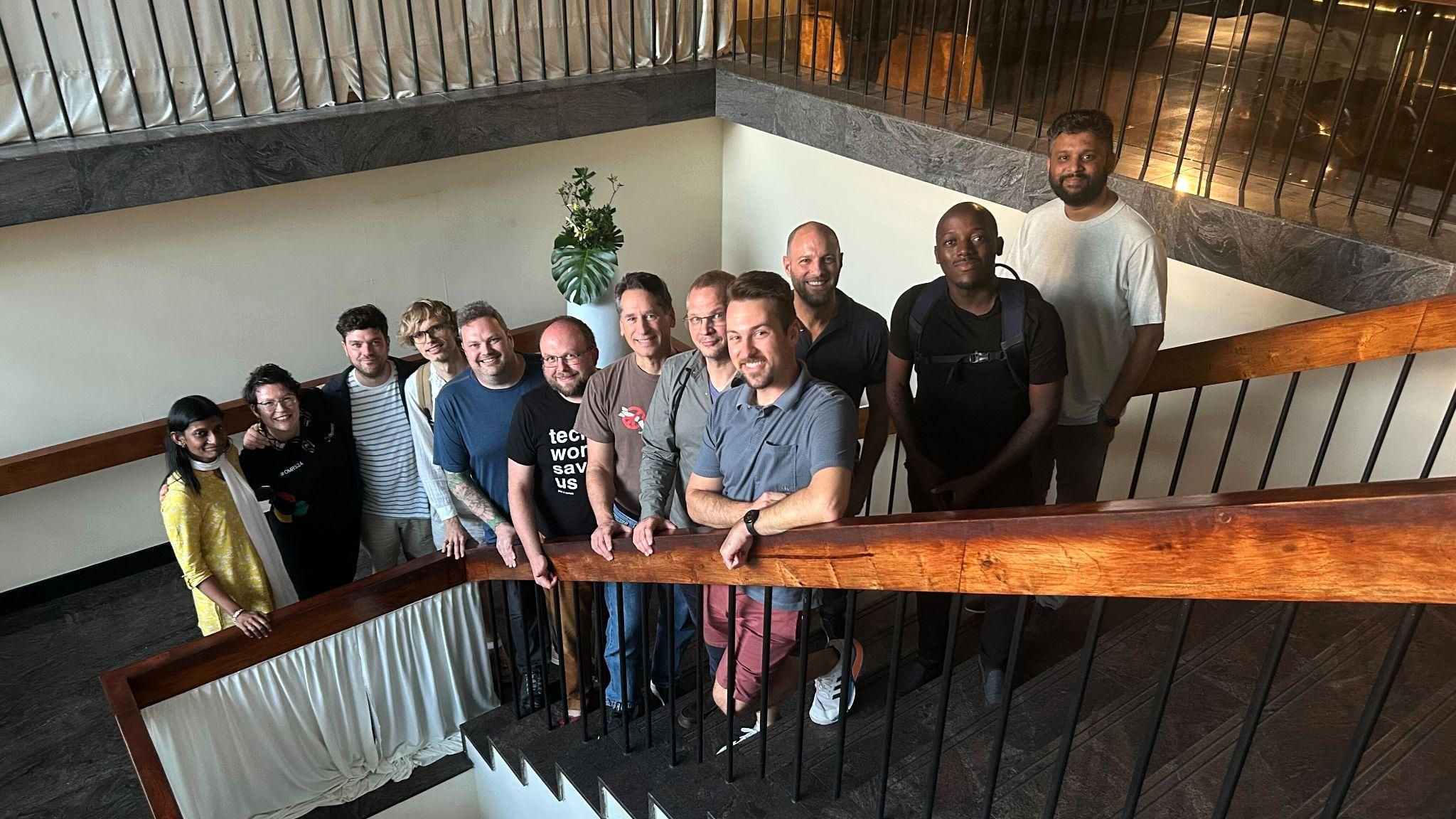
OCL community members at the OCL workshop during the OpenHIE conference in Colombo, Sri Lanka, November 2024.
But the teams doing this work are being asked to do more with less. Over the last two years, donor commitments to global health have fallen sharply. Many ministries, NGOs and implementers are working with fewer people and smaller budgets, while the need to manage terminology and connect local health data to shared standards keeps growing.
The tools we're making available today are part of our response. The public preview lets everyone with an OCL account try the new tools within preview limits and help shape their development before their full launch later this year. They give your team more ability to manage terminology and map local health data to shared standards:
- OCL TermBrowser v3 helps you manage and share your terminology alongside the global community, with side-by-side concept comparisons, filtering with custom properties, and branded organization overviews. A ministry can use these tools to maintain its national dictionary and help implementers find the codes they need.
- OCL Mapper takes a spreadsheet of your local codes and recommends matches to a target terminology like ICD-10, LOINC, or your own custom source, reducing manual searching so your team can focus on the ones that need expert judgement. Several matching algorithms find candidates, the OCL AI Assistant weighs them and explains its recommendation. Your team makes the final decision. Médecins Sans Frontières used an early version of the OCL Mapper in Mosul to cut the time to develop clinical forms by about 80%, from weeks to days.
We're committed to responsible AI. Large language models know a great deal about medicine, but on their own they don't reliably choose the right code, and they sometimes invent one. Grounded in authoritative terminology and your own codes and conventions, their recommendations become more verifiable and reproducible. Our partner, the Columbia International eHealth Laboratory (CIEL), shows this in practice: its interface terminology on OCL links local data elements to reference terms, helping humans and AI infer meaning from local codes and powering the OCL Bridge Matching Algorithm. I believe AI grounded this way is the future of semantic interoperability, and our goal is to put it to work where expertise is scarce, so that a ministry of health or a small NGO can map and maintain its own terminology.
To keep building toward this goal, OCL needs a sustainable service model. The drop in donor funding has reached OCL too, and running these tools at scale has real costs. Paid plans will fund OCL's infrastructure, support development, sustain community stewardship, and help keep these capabilities available to as many teams as possible.
The plans include access to the OCL Mapper and OCL AI Assistant, advanced matching algorithms, private repositories and higher usage limits. They start at $20 a month, with a usage allowance and pay-for-use beyond it. These are introductory prices for the first year, while we learn our full operating costs. We didn't set them alone: about twenty community members from all over the world shaped them in one-on-one conversations. Thank you to everyone who took part.
Subscriptions open later this year, and we'll notify account holders before the paid model takes effect.
What we're committed to preserving is what this community built: public terminology that's free to browse, search and publish, and an open-source core. If no plan works for your team, please reach out. I'd also like to hear where the tools help, where they fall short, and what this change means for you: jon@openconceptlab.org.
OCL started with the belief that terminology tools should reach everyone who needs them, including teams without a terminologist or a large budget. That belief still guides us, and it's why we're taking this step: to give this work a sustainable foundation and put better tools in more people's hands.
Thank you for building OCL with us.
Jon